
Dental sleep medicine in Delta and Surrey
Looking for an Alternative to a CPAP Machine?
Dr. Tim Cheung is a sleep dentist who provides custom oral appliance therapy for adults with a physician’s diagnosis, and a sleep screening if you think something may be wrong.
Request An Appointment
Please don’t include medical details in this form. If you have a prescription or sleep study report, email it to [email protected] before your visit.
Visit our dental clinic serving Surrey and Delta
Address
#302-8035 120 St. Delta BC V4C 6P8
Phone
604-596-5585
Hours
Mon: 8:00 am to 5:00 pm.
Tue: 8:00 am to 5:00 pm.
Wed: 8:00 am to 3:00 pm.
Thu: 8:00 am to 5:00 pm.
Fri to Sun: Closed.
Health Canada licensed devices for sleep apnea
Works with your physician
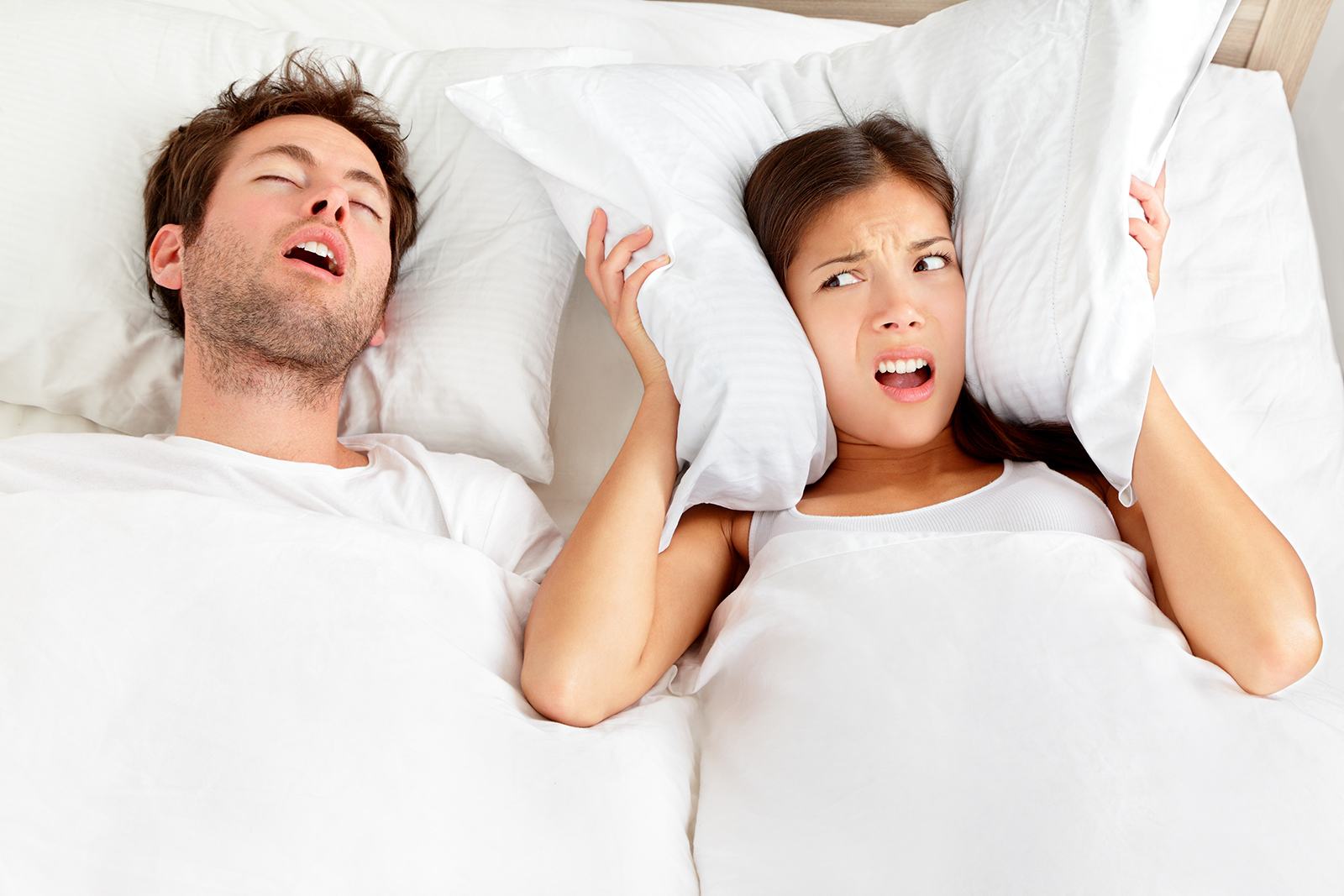
Signs worth talking to your doctor about
Snoring is often seen as a nuisance, but it may be associated with sleep-disordered breathing, including obstructive sleep apnea (OSA). Poor-quality sleep may affect your energy, concentration and overall well-being.
- Loud or frequent snoring
- Pauses in breathing during sleep that someone else has noticed
- Waking up tired even after a full night in bed
- Low energy or trouble concentrating during the day
- A CPAP machine you can’t tolerate because of the mask, the noise or the restricted movement
Choose the path that fits you
I think I might have a sleep problem
- Book a sleep consultation online or call 604-596-5585.
- At your visit, Dr. Cheung goes through medical questionnaires, explains how obstructive sleep apnea presents and the health risks it carries, and reviews the different treatment options.
- He then does a preliminary check of your teeth, gums and oral health to see whether an oral appliance could be an option for you.
- If sleep apnea is suspected, he refers you to your physician for assessment and diagnosis.
Already have a dentist? Dr. Cheung is happy to work alongside them. We would not seek to be your main dental provider, only to help treat sleep-disordered breathing. If you don’t have a dentist, your first visit is a new patient exam that includes the sleep screening.
I already have a prescription or sleep study
- Email your physician’s prescription and your sleep study report to [email protected] before your visit.
- Book online or call 604-596-5585.
- Dr. Cheung reviews your paperwork and assesses whether an oral appliance is suitable for you.
- If it is, your custom appliance is made and fitted, then adjusted over several follow-up visits.
An alternative to a CPAP machine: the custom oral appliance
CPAP is the traditional treatment for obstructive sleep apnea, but some people find the mask bulky, the noise disruptive or the restricted movement hard to live with. For selected patients, a custom oral appliance may be an option, and data shows many patients tolerate an oral appliance much better than CPAP.
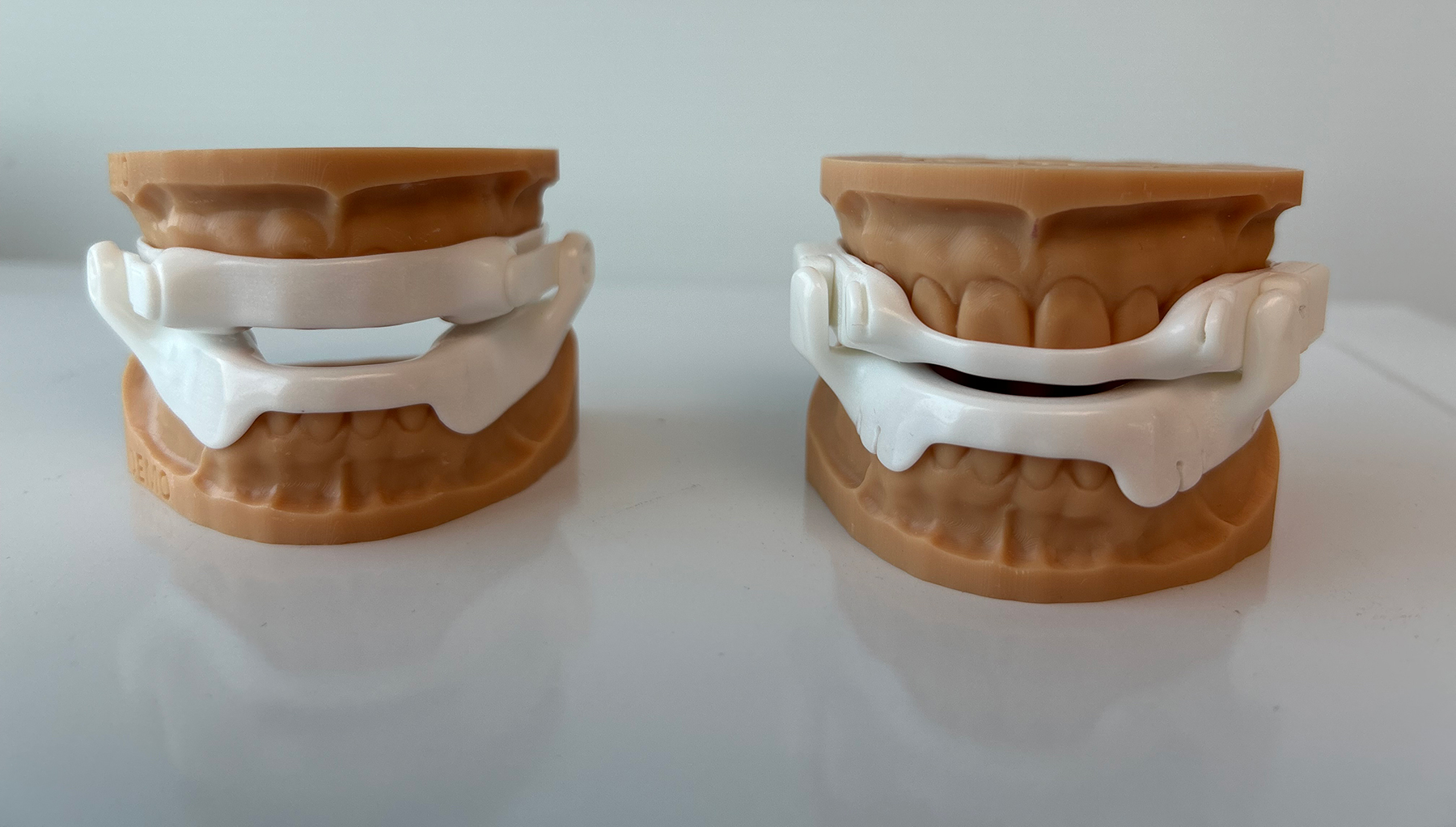
A mandibular advancement device (MAD) is a custom-made appliance worn during sleep. It gently positions the lower jaw forward to help keep the airway more open. It is adjustable, often in steps as small as half a millimetre, so comfort and fit can be fine-tuned.
Unlike over-the-counter boil-and-bite mouthguards, a custom appliance is made for your mouth after a comprehensive dental exam and diagnostic records. Appliances for sleep apnea are Health Canada licensed medical devices.
Not everyone is a suitable candidate. Dr. Cheung looks at your oral health, jaw function, number of teeth and existing dental work before recommending an appliance.
What to expect after you start
An exam at least once a year after that.
With proper care, a custom appliance may last three to five years.
One option among several
An oral appliance is only one way to manage sleep-disordered breathing. For every patient, Dr. Cheung looks at:
Overall health
Lifestyle
Nasal breathing

Your sleep dentist in Delta
How insurance and payment work
Sleep apnea treatment is usually claimed under extended medical benefits, not dental benefits. Basic MSP does not cover it.
What to know before you claim:
- Medical insurers do not speak with dental providers, so you contact your insurer yourself. We give you a form of the questions to ask, so you know your benefits before you commit.
- Insurers usually ask for your sleep study showing a diagnosis, plus a prescription from your physician for an oral appliance with the reason (for example, you can’t tolerate CPAP). A mild diagnosis often has no coverage.
- Many plans set an amount toward either a CPAP machine or an oral appliance.
- You will pay for the treatment upfront, and we will provide a receipt so you can submit your claim to your medical insurance for reimbursement.
- Payment plans are available over four months.
Fees depend on your situation. Call 604-596-5585 and we will walk you through them.
If you receive income or disability assistance, or you can’t tolerate CPAP, the Ministry of Health may provide help with the cost. Ask us for details.
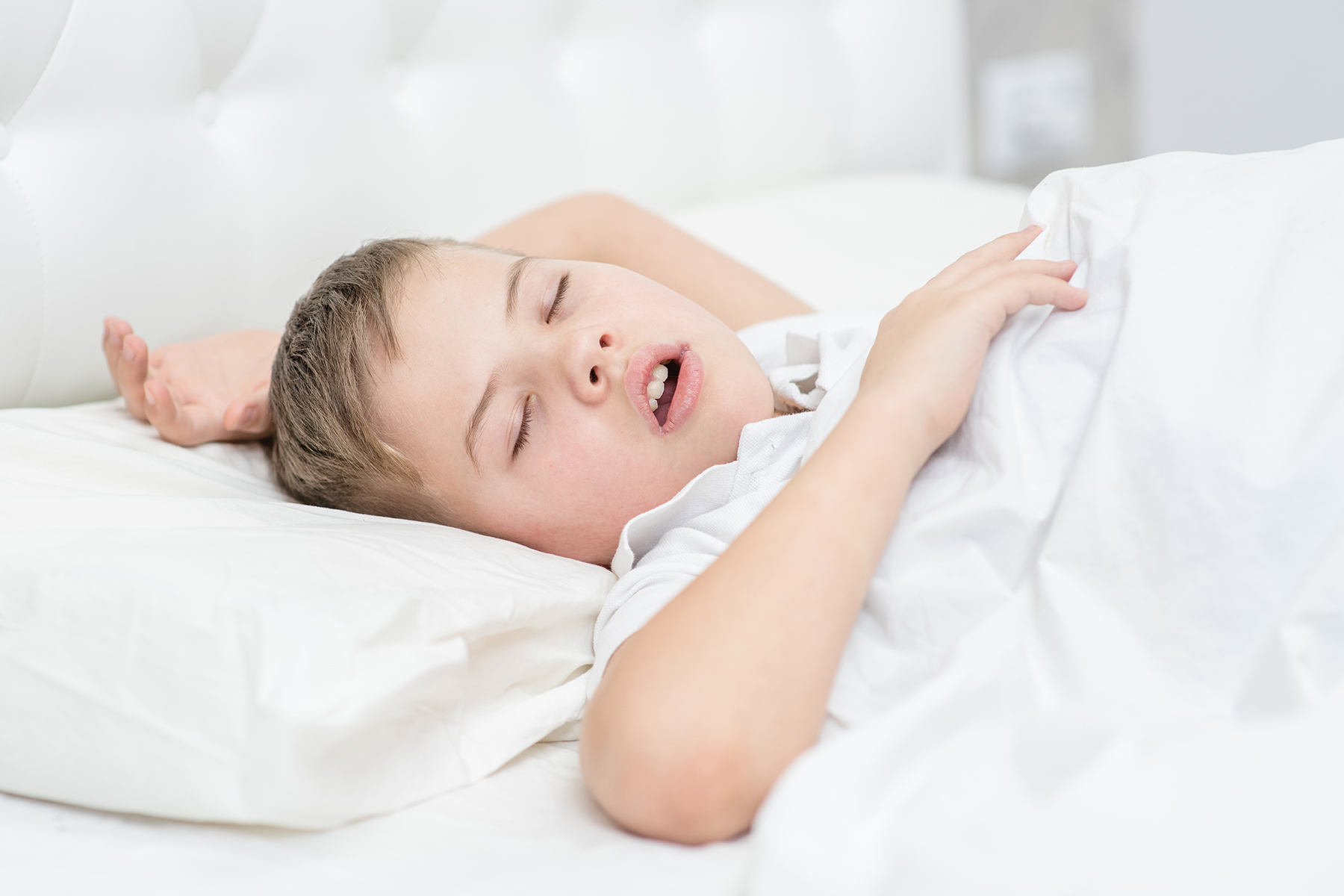
Is your child snoring or breathing through their mouth?
He looks at breathing, growth patterns and tongue, lip and cheek habits. Recognizing these early can mean faster management if a problem is suspected.
Based on current guidance, we do not recommend a dental treatment on its own to improve a child’s airway. Screening helps your family get to the right assessment sooner.
Good to know: early orthodontic treatment, such as rapid palatal expansion to make room for crowded teeth, also widens the nasal cavity, which may improve nasal breathing. This is a side benefit, not a treatment for sleep apnea.
Frequently asked questions
Do I need a prescription for an oral appliance?
Can I get an appliance just for snoring?
Is an oral appliance better than CPAP?
Are the appliances approved in Canada?
Does insurance cover it?
How many visits will I need?
How long does an appliance last?
Do I have to become a patient at Wellbeing Dental?
Do you treat children?
I'm looking for a dental clinic in Surrey. Do you serve my area?
Office Hours
Tues. 8:00am - 5:30pm
Wed. 8:00am - 3:00pm
Thurs. 8:00am - 5:30pm
Fri. Closed
Sat. Closed
Sun. Closed